


Weight Loss Hypnotherapy Program

8-Session Weight Loss Hypnotherapy Program
Sustainable, Natural Weight Loss—From the Inside Out
Are you ready to release the weight—physically, emotionally, and mentally? This 8-session weight loss hypnotherapy program is designed to help you break through old habits, rewire your relationship with food, and reconnect with your body in a healthy, lasting way.
How to Become a Super Ager: 5 Research-Backed Habits for Longevity

How to Become a Super Ager: 5 Research-Backed Habits for Cognitive Vitality, Physical Strength, and Lifelong Purpose
What Is a Super Ager?
“Super agers” are older adults—typically over the age of 80—who maintain exceptional cognitive, emotional, and physical health, often performing on memory tests as well as or better than individuals 20–30 years younger. The term was coined by neuroscientist Emily Rogalski, PhD, at Northwestern University’s Feinberg School of Medicine to describe individuals with unusually resilient brains despite their age (Rogalski et al., 2013).
Over the past decade, research has shown that super agers exhibit greater memory retention, emotional resilience, social connectivity, and physical capacity than their age-matched peers. These advantages are not solely genetic—many are influenced by modifiable lifestyle factors. Here’s how to become a Super Ager.
Schedule Your Zoom Consultation with Christine Crawford, CCHt

Schedule Your Zoom Consultation with Christine Crawford, CCHt
Ready to take the first step toward greater peace, clarity, and well-being?
Whether you’re looking for support with stress relief, personal growth, or a deeper mind-body connection, I’d love to connect with you in a one-on-one Zoom consultation.
 Sessions are offered via Zoom for your comfort and convenience.
 Initial consultations are currently discounted for a limited time.
To schedule your consultation, simply email me with a few preferred days and times, and I’ll get back to you promptly to confirm.
Email: ChristineCrawfordHealth@gmail.com
Christine Crawford, CCHt.
Certified Clinical Hypnotherapist | Therapeutic Imagery Master
The Power of Plants: Why Eating the Rainbow Matters
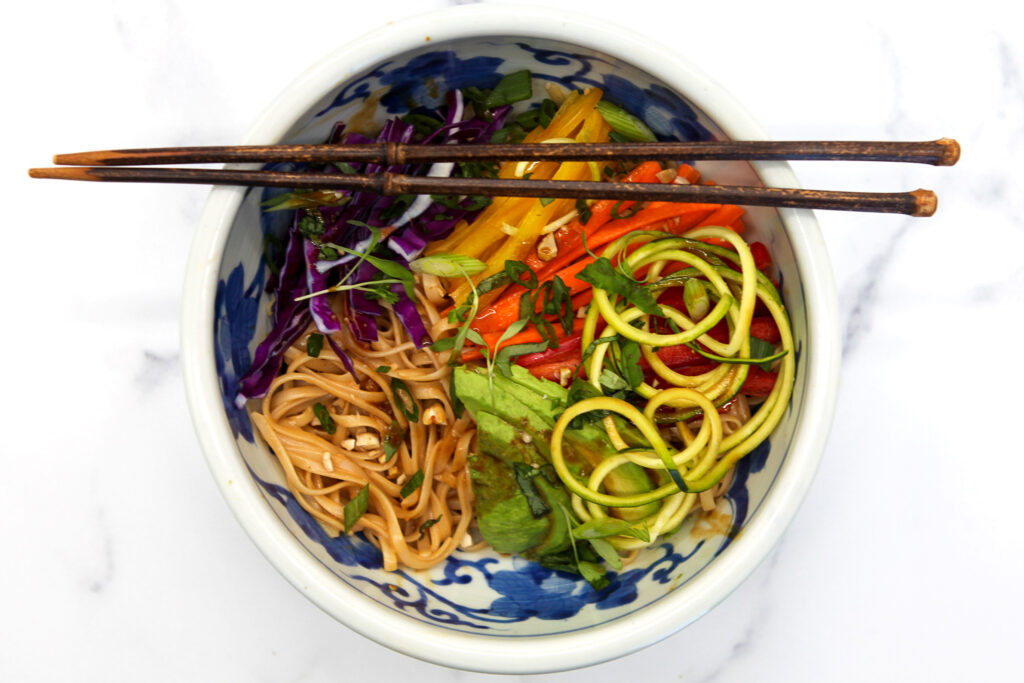
You’ve likely heard the phrase “eat the rainbow,” but what does it really mean? This simple advice refers to including a wide variety of colorful fruits and vegetables in your daily diet. Each color represents different phytonutrients—natural compounds found in plants that offer powerful health benefits. By eating a spectrum of colors, you’re giving your body a diverse range of vitamins, minerals, antioxidants, and fiber that work together to support overall wellness.
Red vegetables like tomatoes, red bell peppers, and beets are rich in lycopene and anthocyanins, which support heart health and may help reduce the risk of certain cancers. Orange and yellow veggies, such as carrots, sweet potatoes, and squash, are loaded with beta-carotene—a precursor to vitamin A, which boosts vision and strengthens the immune system. Green vegetables like spinach, kale, and broccoli provide folate, iron, and lutein, promoting healthy blood and sharp eyesight. Blue and purple vegetables like eggplant and purple cabbage are full of antioxidants that protect the brain and fight inflammation.
Vegetables are also naturally low in calories and high in fiber, which supports healthy digestion and helps regulate blood sugar. Including more plant-based meals in your routine has been linked to lower rates of chronic conditions like heart disease, type 2 diabetes, and even cognitive decline. Plus, their high water content helps keep you hydrated, and the fiber they provide promotes a feeling of fullness, which can support weight balance without deprivation.
One easy and delicious way to start eating the rainbow is with my Spring Roll Bowl—a fresh, vibrant dish packed with spiralized veggies, rice noodles, and a tangy homemade sauce. It’s a perfect example of how colorful eating can be just as satisfying as it is nourishing. Get Recipe Here
Stronger Muscles, Sharper Mind: How Midlife Strength Training Protects Body and Brain
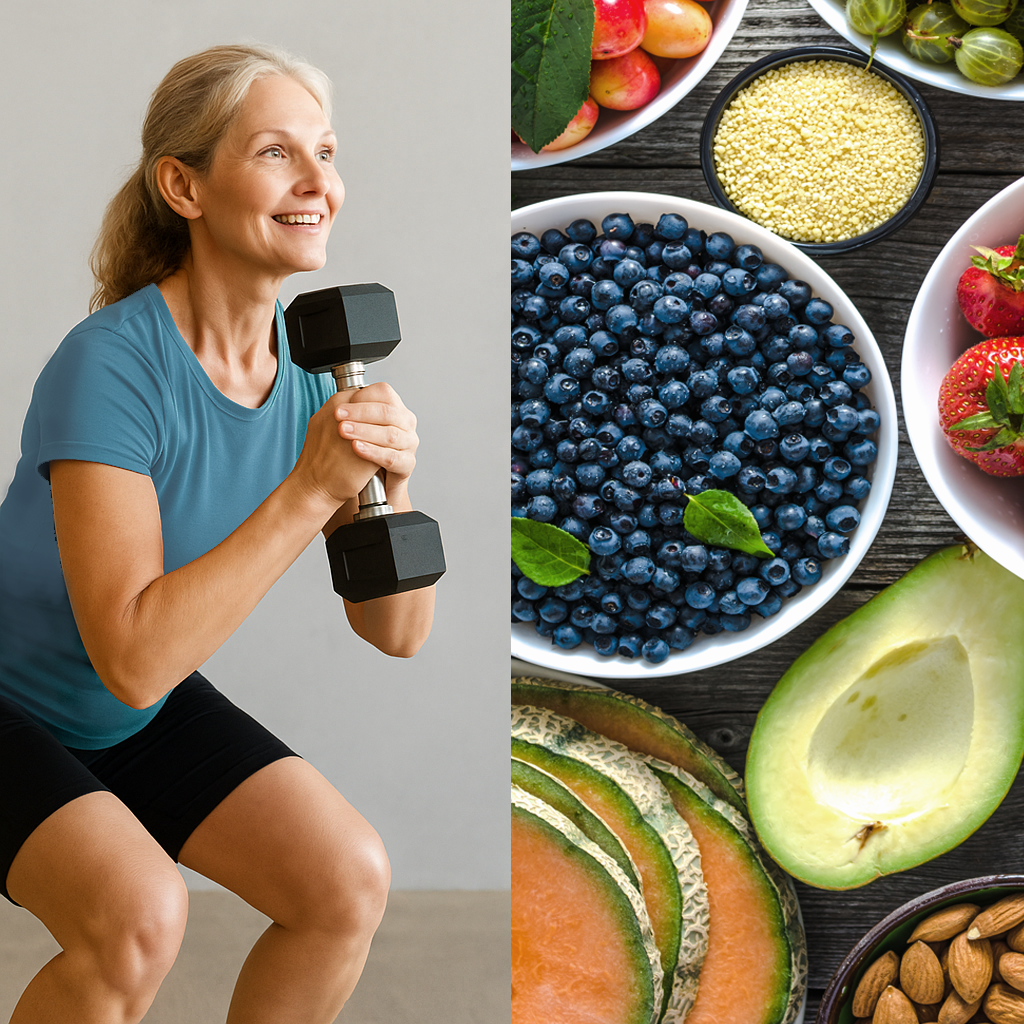
We often think of aging as something that just happens—but new science shows that building muscle in midlife doesn’t just protect your strength and energy; it can help preserve your brain too.
Strength Training: The Anti-Aging Tool for Body and Mind
A new study published in GeroScience (2024) revealed that twice-weekly resistance training not only increased physical strength in adults over 55 with mild cognitive impairment, but also improved verbal memory and protected key brain regions from shrinkage.


Nourishing for the Long Haul: Why Midlife Eating Habits Matter More Than Ever

We’ve all heard it before: eat more whole foods, cut back on the processed stuff, stay hydrated, get enough sleep, and repeat. It’s the wellness world’s version of “back up your files”—basic, maybe, but foundational.
But now, a groundbreaking 30-year study published in Nature Medicine has confirmed what many of us have long believed: how we nourish ourselves in our 40s, 50s, and 60s directly impacts how we show up in our 70s—and beyond. And this time, there are numbers to prove it.
How I Found Hypnotherapy: A Personal Journey

Me at my book signing at Barnes and Noble.
My hypnotherapy journey started long before I even knew what it was. I was in high school, caught in the throes of some emotional drama that I honestly can’t even remember now. But what I do remember is how overwhelmed I felt—and the way my mother responded when I finally reached out for help. She didn’t try to fix the problem or tell me how to feel. Instead, she gently guided me to lie down and close my eyes.
Get the gift of Wellness today! Click to learn more.