

We often think of aging as something that just happens—but new science shows that building muscle in midlife doesn’t just protect your strength and energy; it can help preserve your brain too.
Strength Training: The Anti-Aging Tool for Body and Mind
A new study published in GeroScience (2024) revealed that twice-weekly resistance training not only increased physical strength in adults over 55 with mild cognitive impairment, but also improved verbal memory and protected key brain regions from shrinkage.
Participants who lifted weights twice a week for six months maintained the volume of areas like the hippocampus (crucial for memory) and precuneus (linked to attention and self-awareness), while their sedentary peers experienced brain volume loss. Even more impressive: resistance training improved the white matter integrity of the brain—boosting how efficiently it processes and communicates information.
In short: lifting weights helped keep their bodies stronger and slowed cognitive decline.
Midlife Muscle: Why It Matters Now
This builds on research from Frontiers in Sports and Active Living (2024), which highlighted that sarcopenia—the age-related loss of muscle—can start in your 40s. Preserving both muscle mass and quality is key to aging with resilience. Power-based resistance training is especially important, as it supports mobility, glucose regulation, metabolic health, and even mood.
Pairing resistance training with smart nutrition and gut health makes it even more effective.
The Gut-Muscle-Brain Connection
A 2025 study in Frontiers in Nutrition found that a gut-friendly diet (measured by the Dietary Index for Gut Microbiota, or DI-GM) cut the risk of sarcopenia by over 50%. Fiber-rich, anti-inflammatory foods not only feed beneficial microbes, but also reduce systemic inflammation that damages both muscle and brain.
Build a Brain-Strong, Body-Strong Routine
Here’s what science says works best:
Strength Training
-
2x/week, full-body sessions
-
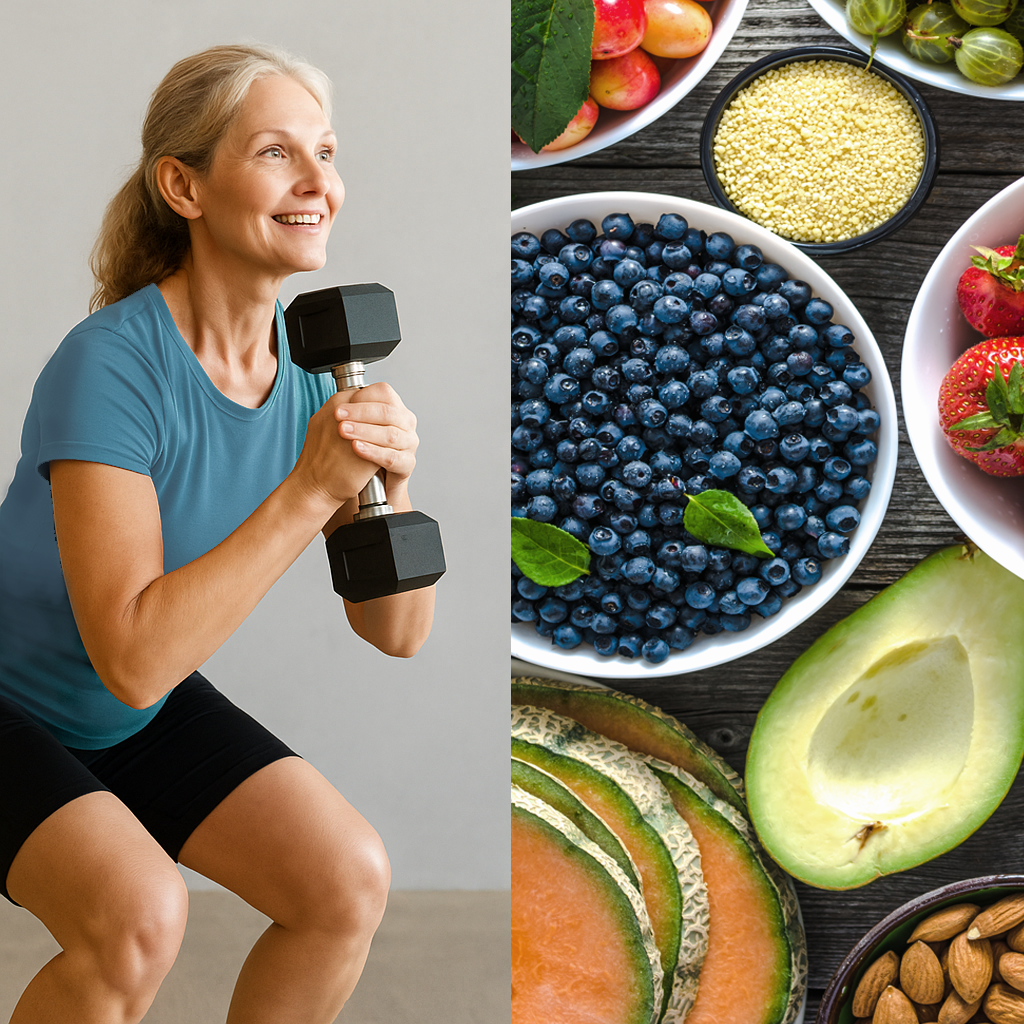
Compound movements (e.g., squats, lunges, presses, rows)
-
Use moderate-to-heavy resistance (around 80% of your 1-rep max, or a 7–8 out of 10 effort)
-
Focus on progressive overload (gradually increasing resistance over time)
-
Consistency is key: measurable cognitive and muscular improvements can appear in 6 months
Nutrition
Support your gut and muscles with:
-
Blueberries, cranberries, chickpeas, soy, avocados, broccoli
-
Fermented dairy (yogurt, kefir), whole grains, green tea, and coffee
-
Minimize red/processed meats, refined grains, and ultra-processed high-fat foods
Final Takeaway: Don’t Skip Strength
If you’re over 40—and especially over 55—resistance training isn’t just for fitness. It’s a science-backed way to protect muscle, mind, and longevity. You don’t need a gym membership. Bodyweight movements, resistance bands, and dumbbells done with intention can transform your health.
It’s never too late to build strength—or to protect what matters most.
References:
-
Coelho-Júnior, H.J., et al. (2024). Effects of resistance training on memory performance and brain structure in older adults with mild cognitive impairment: A randomized controlled trial. GeroScience. https://doi.org/10.1007/s11357-024-01098-9
-
Griffin, T.M., et al. (2024). The critical role of midlife skeletal muscle maintenance for lifelong health. Frontiers in Sports and Active Living.
-
Cheng, X., et al. (2025). Dietary patterns that support gut microbiota composition are linked to reduced risk of sarcopenia. Frontiers in Nutrition.
-
Ticinesi, A., et al. (2017). The gut–muscle axis in older adults: a target for sarcopenia prevention and treatment. Current Opinion in Clinical Nutrition & Metabolic Care, 20(1), 43–48.
-
Morton, R.W., et al. (2018). A systematic review, meta-analysis and meta-regression of the effect of protein supplementation on resistance training–induced gains in muscle mass and strength in healthy adults. British Journal of Sports Medicine, 52(6), 376–384.
Disclaimer: This content is for informational purposes only and is not a substitute for medical advice. Always consult a qualified healthcare provider regarding your personal health needs.
Hi there! I’m Christine, the heart and hands behind Christine Crawford Health. I’m passionate about sharing tips, recipes, and insights to help you nurture your mind, body, and soul. Like everything on my site, this article comes from my personal journey and my love for helping others find balance and joy. If you’d like to connect or learn more, feel free to email me at christinecrawfordhealth@gmail.com Thank you for being part of this journey with me!